
EasyJet Flight U2238 Emergency Landing Newcastle: What Happened on the Copenhagen to Manchester Route

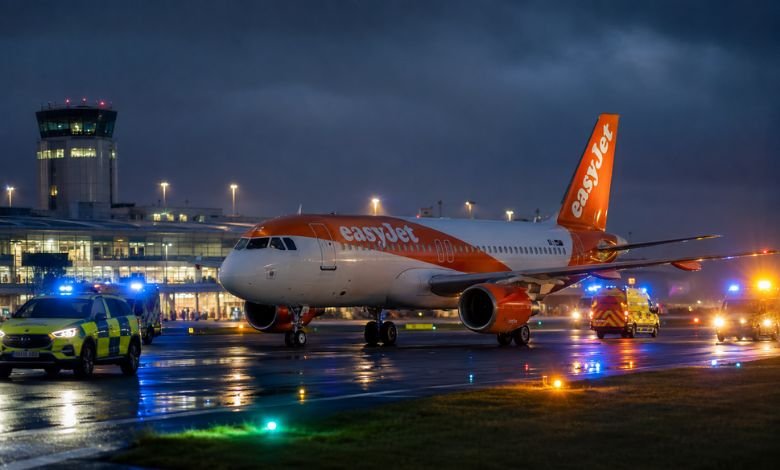
Many searches were made about the story of this European flight, EasyJet flight U2238, which changed course dramatically just before reaching Manchester and made an emergency landing in Newcastle. A passenger flying from Copenhagen to Manchester was forced to divert to Newcastle after suffering a medical emergency on October 27, 2025.
For many readers, the words “emergency landing” sound alarming. In this case, available reports point to a medical diversion rather than a fault with the aircraft. This article explains what happened, why Newcastle was chosen, what the flight number confusion means, and what passengers should understand when a commercial flight diverts because of a medical emergency.
EasyJet Flight U2238 Emergency Landing Newcastle: The Main Details
The flight at the centre of the story was an easyJet service from Copenhagen Airport in Denmark to Manchester Airport in the United Kingdom. Public reports identify the service as U22238 or EZY2238, while many people online have searched for it as U2238. The route, airline, date, and diversion airport all refer to the same reported incident.
The aircraft departed Copenhagen in the late evening of 27 October 2025. While travelling toward Manchester, the crew declared an emergency and diverted to Newcastle Airport. Reports said emergency services met the aircraft after landing, and the affected passenger was handed over for medical care.
The important point is that the aircraft landed safely. There is no reliable public report suggesting that an engine issue, fire, or major technical failure caused the diversion. The stated reason was a passenger welfare or medical issue onboard.
Why the Flight Number Caused Confusion
One reason the story spread under different names is the flight number. Some sources used U22238, some used EZY2238, and search users often typed U2238. This is because not all airlines and flight tracking systems display flight numbers in the same way.
For passengers, easyJet flight numbers often appear with the airline’s commercial code. In operational aviation systems, the callsign can appear differently. That is why a person checking a flight tracker may see one version, while a passenger booking page or news report may show another.
To put it briefly, the search term easyJet flight U2238 emergency landing newcastle points to the easyJet flight from Copenhagen to Manchester that was said to have made an emergency landing in Newcastle on 27 October 2025. The more precise versions reported publicly are U22238 and EZY2238.
What Happened During the Flight?
The flight was on its way across northern Europe toward Manchester when the crew responded to a medical situation onboard. According to aviation reporting, the aircraft was over the North Sea area when the emergency was declared and the route changed toward Newcastle.
A medical emergency in the air can involve many possible situations, such as a passenger becoming seriously unwell, needing urgent assessment, or requiring treatment that cannot wait until the planned destination. Public reports have not confirmed the passenger’s exact condition, so it would be wrong to guess.
What is known is that the crew chose to divert instead of continuing to Manchester. That decision highlights the situation demanding more rapid access to medical support on the ground. In aviation, a diversion is often the safest and most practical response to the urgent medical needs of someone on board.
Why Newcastle Was Chosen Instead of Manchester
At first glance, some readers may wonder why the aircraft did not simply continue to Manchester. The answer is usually based on distance, time, airport suitability, and medical urgency.
Newcastle was a practical diversion point because the aircraft was coming in from the North Sea and approaching northeast England. If a passenger requires urgent help, saving even a few minutes makes a difference, so the crew must choose a suitable, nearby airport where emergency services are ready.
Several factors can influence this decision:
- The passenger’s condition and how urgent it appears
- The aircraft’s position at the time of the emergency
- Weather conditions at nearby airports
- Runway suitability for the aircraft type
- Air traffic control guidance
- Availability of emergency medical response on arrival
The closest airport is not always automatically the best option. The crew needs somewhere safe and prepared that works. In this case, Newcastle was selected, and emergency services were ready when the aircraft arrived.
What “Emergency Landing” Really Means
The phrase “emergency landing” can create the impression that the aircraft itself was in immediate danger. Sometimes that is true, but not always. An emergency landing can also happen because of a serious passenger illness, a security concern, smoke in the cabin, a technical warning, severe weather, or another urgent reason.
In this incident, the available information points to a medical diversion. That means the plane landed at another airport so a passenger could get care faster. It doesn’t necessarily mean that the plane was unsafe to fly.
This is a vital distinction, for dramatic wording can lead passengers and readers to imagine the worst. A diversion is a serious event, but also a normal part of aviation safety planning. When something unexpected happens,pilots, cabin crew, air traffic controllers, airport staff, and emergency services all coordinate quickly to respond effectively.
What Does Squawk 7700 Mean?
Some aviation reports said the aircraft declared an emergency. In flight tracking forums, commentators often link the emergency declaration to transponder code 7700, commonly known as the general emergency code. When a crew uses an emergency code, air traffic control can identify the aircraft as needing priority handling.
A general emergency code does not explain the exact cause by itself. It may be used for a technical issue, a medical problem, a pressurisation concern, or another time-sensitive situation. That is why it is important not to assume a mechanical failure simply because a flight tracker shows an emergency alert.
For passengers watching flight paths online, a sudden turn and emergency code can look frightening. For the crew, it is a way to communicate clearly with air traffic control and direct the aircraft where it needs to be with priority support.
Was the Aircraft Reported to Have a Technical Problem?
According to available reports, the easyJet aircraft did not experience a technical failure during this event. The airline statement reported by news outlets said the flight diverted because a customer onboard required urgent medical attention.
That does not make the situation unimportant. A serious medical issue at cruising altitude is challenging because the crew has limited medical equipment compared with a hospital. Cabin crew are trained to give first aid, contact support where available, and ask whether any medical professionals are travelling as passengers. Still, some cases require ground treatment as soon as possible.
The safe landing at Newcastle shows how the system is designed to work. The crew knew the seriousness of the situation, made contact with air traffic control, landed at an appropriate airport and handed over to medical responders.
What Happened After Landing at Newcastle?
After landing at Newcastle, emergency services met the aircraft and took the passenger into care, according to public reports. Once the situation was handled, the flight continued toward Manchester.
For the other passengers, the diversion probably meant a delayed arrival, plans lost and anxiety on the trip. But in a medical emergency the health of the passenger is above the original schedule. Airlines and crews are expected to put safety first, even if that means inconvenience to other passengers.
A short delay is frustrating, especially late at night. But most passengers know that urgent medical assistance cannot be delayed just to stay on schedule.
Could Passengers Claim Compensation?
Compensation depends on the exact circumstances, the length of delay, the route, and the rules that apply. The UK Civil Aviation Authority explains that airlines do not have to pay fixed compensation when a disruption is caused by “extraordinary circumstances,” meaning events outside the airline’s responsibility.
A passenger medical emergency is often treated as outside the airline’s direct control. That means passengers may not automatically qualify for fixed compensation just because the flight diverted. However, travellers should still check official airline messages, keep receipts, and review their travel insurance if the delay caused additional costs.
Passengers affected by any disruption should save:
- Boarding passes
- Delay or diversion notifications
- Hotel, taxi, or food receipts
- Missed connection details
- Written communication from the airline
If someone believes the airline failed to provide required care or information, they can contact the airline first and then follow the official complaints route if needed.
What Travellers Can Learn from the Incident
The emergency landing of easyJet flight U2238 in Newcastle serves as a reminder that diversions can occur for reasons other than immediate danger to the aircraft. Occasionally, they happen because someone onboard needs urgent help.
Passengers respond better if they know what is going on. If a flight is diverted, remain seated when directed, follow crew instructions, do not block aisles and do not spread unverified claims on social media.
It is also important to respect privacy. A medical emergency is personal. Filming or posting details about an unwell passenger may create distress and can make the situation harder for those involved.
How Airlines Handle Medical Emergencies in the Air
Airlines train cabin crew to deal with medical incidents, but the crew’s role is not the same as a hospital team’s. They can provide first aid, use onboard medical kits, support the passenger, and communicate with the pilots. The captain then decides whether the flight should continue or divert.
That decision is not taken lightly. A diversion can affect hundreds of people, airport operations, aircraft scheduling, crew working hours, and connecting flights. Even so, when a passenger may need urgent treatment, the correct choice is often to land as soon as possible at a suitable airport.
The incident also shows why airports need emergency response teams ready for unexpected arrivals. Newcastle’s role was not simply to receive the aircraft, but to provide a safe place where medical help could reach the passenger quickly.
Why Accurate Reporting Matters
Aviation stories can spread quickly because flight trackers make aircraft movements visible to the public. People can post screenshots of an aircraft making a quick turn before official information is released. This can cause confusion, especially with truncated, misread or differently presented flight numbers.
In this case, the main facts are clear enough: an easyJet Copenhagen-to-Manchester service diverted to Newcastle on October 27, 2025, because of a passenger medical issue. Beyond that, readers should be careful with claims about the passenger’s condition, onboard panic, or technical problems unless they come from reliable, confirmed reports.
Accurate reporting avoids drama when the facts do not support it. A safe medical diversion is serious, but it should not be presented as a near-disaster without evidence.
Conclusion
The easyJet flight U2238 made an emergency landing in Newcastle as a medical diversion involving an easyJet service from Copenhagen to Manchester on October 27, 2025. The flight, also reported as U22238 or EZY2238, diverted to Newcastle so an unwell passenger could receive urgent medical attention.
The main takeaway is simple: an emergency landing does not always mean the aircraft itself is in danger. In this case, the available facts point to a controlled safety decision made for a passenger’s health. Travellers affected by similar diversions should follow crew instructions, wait for official airline updates, keep travel documents, and check their rights or insurance if the disruption causes extra costs.
Frequently Asked Questions
Why did easyJet flight U2238 make an emergency landing in Newcastle?
The flight diverted to Newcastle because a passenger onboard required urgent medical attention. Public reports describe it as a medical or passenger welfare issue, not a confirmed aircraft fault.
Was the flight really called U2238?
While users commonly search for U2238, operational flight reports list it as U22238 or EZY2238. All these codes refer to the same Copenhagen-to-Manchester service.
Did the plane land safely?
Yes. The aircraft landed safely at Newcastle Airport, where emergency services met the flight and assisted the passenger.
Was there a technical problem with the easyJet aircraft?
Available public reports do not confirm a technical problem with the aircraft. The reported reason for the diversion was urgent medical attention for a customer onboard.
Can passengers receive compensation after a medical diversion?
Not always. UK passenger rights rules state that extraordinary circumstances beyond the airline’s control, such as a medical emergency, may exempt the airline from paying fixed delay compensation. Passengers should still check their delay length, official updates, and travel insurance coverage.
