
Tracking technology has moved far beyond simply finding a lost phone. Today, a small GPS device can help locate a vehicle, protect valuable belongings, monitor a journey, or keep track of personal activity. This is where the term Tracqueur often appears in online searches, particularly alongside phrases such as Traqueur GPS, GPS tracker and tracking app.
The spelling can be confusing because “traqueur” is the French term commonly used for a tracker, while “traceur” is also used in French technology and GPS contexts. In practice, the wider idea is the same: using location technology to understand where an object, device or person is, with the appropriate permission.
This guide explains how a Tracqueur works, what features users should look for, how GPS tracking apps operate and what matters when reading reviews.
What Is Tracqueur and What Does a GPS Tracker Do?
A Tracqueur is best understood as a general term linked to tracking technology rather than one single universal product. A tracking system can be a small physical device, a smartphone application, or a combination of hardware, mobile networks and software.
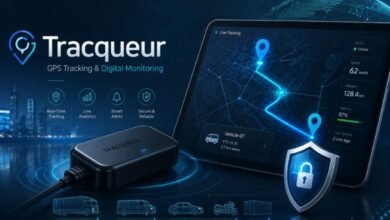
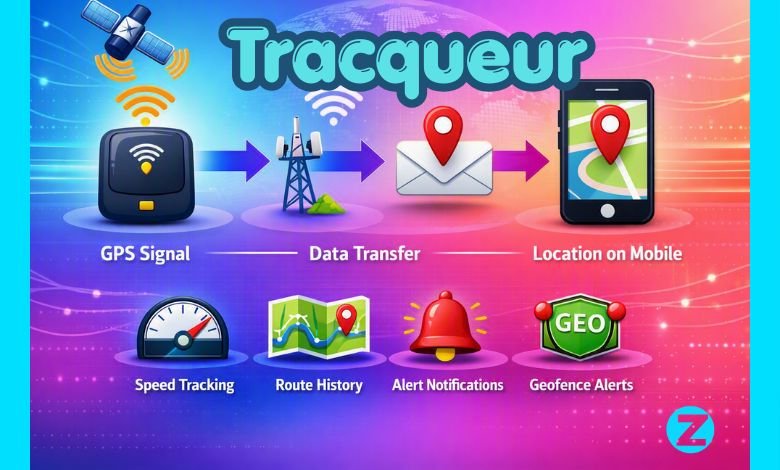
A typical GPS tracker receives positioning information and then communicates that information through a network connection. The user can usually see the location through an app or web dashboard. Depending on the device, the system may also record movement history, speed, routes and alerts.
GPS trackers are now used for many different purposes. Vehicle owners may use them as part of an anti-theft strategy, while businesses can use fleet tracking to understand vehicle movements and improve route planning. Personal trackers can also be used for luggage, equipment, bicycles and other valuable items.
The French consumer authority describes GPS trackers as small electronic devices that can be attached to personal belongings and used with a smartphone application to view their location.
How Does a Traqueur GPS Work?
The technology behind a Traqueur GPS can look complicated, but the basic process is relatively simple. The tracker determines its position using satellite-based positioning and then sends relevant information to a connected service when network conditions allow.
The information may then appear on a smartphone map. Depending on the product, users can see a current position, previous locations or a route taken during a particular period.
Some systems are designed for continuous or frequent monitoring, while others update their position at intervals. This difference can have a major effect on battery life. A tracker that communicates frequently may provide more timely information but can consume more power.
Network coverage also matters. GPS positioning and mobile connectivity are not exactly the same thing. A device may be able to calculate its location but still have difficulty sending that information when it has poor cellular coverage.
Modern tracking systems can therefore combine several technologies, including GPS, mobile networks, Bluetooth, Wi-Fi or other location methods. The exact combination depends on the product and its intended use.
What Features Should You Expect From a Traqueur App?
The Traqueur app is often just as important as the physical tracker. A technically capable device can still be frustrating if its application is slow, confusing or unreliable.
One of the most useful features is live location viewing. A clear map allows users to understand where the tracker is without having to interpret complicated technical data.
Another important function is location history. Rather than showing only the current position, some apps keep a record of previous movements. This can help users review a journey or understand where an item travelled.
Geofencing is another popular feature. It allows users to create a virtual geographical area and receive an alert when the tracked device enters or leaves that area. Vehicle and fleet tracking platforms commonly use this type of notification.
Other useful features can include:
- Real-time GPS location
- Route and location history
- Geofence alerts
- Movement notifications
- Speed information
- Multiple-device management
- Battery-status information
- Map-based tracking
- Exportable activity or route data
However, users should always check the individual product because features can vary considerably between apps and devices.
Traqueur Reviews: What Should You Check Before Choosing One?
A good Tracqueur review should look beyond the headline specifications. Location accuracy, battery life, connectivity and app quality can all affect the real-world experience.
Location accuracy is particularly important. A tracker does not need to provide a perfect position every second to be useful, but the information should be reliable enough for the intended purpose.
Battery performance is another major consideration. A compact tracker may be convenient to carry, but frequent location updates and mobile communication can increase power consumption. Some smartphone tracking apps also warn that continuous background location use can reduce battery life.
The app itself deserves close attention. Users should look at its rating, update history, privacy information and subscription structure. For example, different GPS apps available through Apple’s App Store offer very different approaches, ranging from personal route recording to family location sharing.
Reviews can also reveal problems that specifications do not mention. Setup difficulties, unreliable notifications, weak connectivity or confusing subscription terms may only become obvious after real-world use.
For this reason, the best approach is to compare several independent reviews rather than relying on a single rating.
Privacy, Consent and Responsible GPS Tracking
GPS tracking can provide genuine security benefits, but privacy should never be treated as an afterthought. Tracking another person without their knowledge or appropriate consent can create serious ethical and legal problems.
Family-location applications, for example, commonly require participating users to agree to location sharing. One current GPS family-tracking app explicitly states that mutual consent is required before location sharing can take place.
The same principle should apply when considering any Tracqueur GPS solution. Users should understand what information is collected, where it is stored, who can access it and how long it is retained.
Privacy policies are particularly important for app-based trackers because location information can be highly sensitive. Before paying for a tracking service, check its permissions and data practices rather than focusing only on the map and tracking features.
Is a Tracqueur GPS Worth It?
Whether a Tracqueur is worthwhile depends largely on the user’s purpose. Someone trying to protect a valuable vehicle may have very different requirements from a runner who simply wants to record routes.
For vehicle owners, useful features may include movement alerts, location history and reliable connectivity. For personal fitness, route recording, distance, speed and activity statistics may matter more. Some GPS activity apps, for example, offer live maps, training history, speed and distance information.
Cost is another factor. Some applications are free with optional purchases, while dedicated GPS hardware may require a device purchase and an ongoing subscription. Users should calculate the total cost over time instead of comparing only the initial price.
Ultimately, the best tracker is not necessarily the one with the largest feature list. It is the one that provides the right combination of accuracy, battery life, connectivity, app quality, privacy and price for the job.
Conclusion
Tracqueur is best viewed as part of the wider world of GPS tracking rather than as a single type of device. From vehicle security and asset protection to fitness and personal route recording, tracking technology now covers a remarkably wide range of everyday needs.
The most important factors are not simply the presence of GPS. Accuracy, connectivity, battery life, app design, location history, alerts, privacy and long-term costs all influence whether a tracker is genuinely useful.
For anyone researching a Traqueur GPS, the smartest approach is to identify the intended purpose first and then compare products based on real-world performance and privacy practices. With the right system, GPS tracking can offer convenience and peace of mind without becoming unnecessarily complicated.
FAQs About Tracqueur
What does Tracqueur mean?
Tracqueur is commonly associated with the French word for a tracker. In technology, it can refer broadly to a device or application used to track location, movement or activity.
Is a Traqueur GPS the same as a GPS tracker?
Generally, yes. “Traqueur GPS” is commonly used to describe a GPS tracking device or system. The exact functions depend on the manufacturer and model.
Can a Traqueur GPS work without a phone?
Some GPS trackers can operate independently and communicate through their own network connection. Others depend heavily on a smartphone application for setup, monitoring and location display.
Does GPS tracking use a lot of battery?
It can. Frequent location updates and background communication may consume more power. Battery performance varies according to the tracker, update frequency, network conditions and settings.
Can GPS tracking show previous locations?
Many tracking systems provide location history, allowing users to review previous routes or positions. However, the length and detail of the history depend on the specific service.
Are GPS tracking apps free?
Some are free, while others use subscriptions or in-app purchases. Users should check exactly which features are included in the free version before choosing an app.
Is it legal to track another person?
The answer depends on the circumstances and local law. Tracking should be used responsibly, with appropriate permission and in accordance with applicable privacy and data-protection rules.