
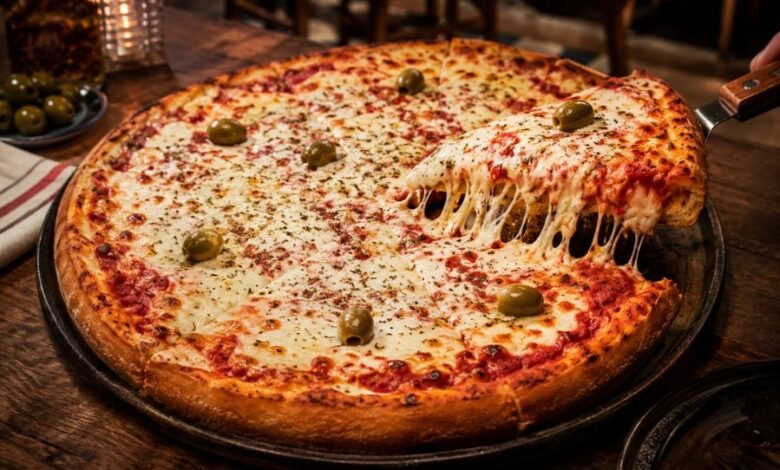
Pizza porteña is the bold, cheese-heavy pizza style closely associated with Buenos Aires. Unlike a thin, crisp Neapolitan pizza, the classic pizza al molde version has a thicker, airy base with a lightly crisp bottom and plenty of mozzarella stretching across the top. Tomato sauce, oregano and green olives are common finishing touches. The style grew from Buenos Aires’ strong Italian immigrant food culture and became part of the city’s everyday pizzeria tradition.
If you are searching for the best pizza porteña near me, those are useful details to look for. A good version should feel substantial without being dry, with enough cheese to cover the dough generously.
What Is Pizza Porteña?
Pizza porteña simply means Buenos Aires-style pizza. One of its best-known forms is pizza al molde, baked in a pan rather than stretched into a very thin base. The dough rises higher, giving each slice a soft, bread-like middle and a firmer underside.
Mozzarella is a major part of the experience. Classic versions are known for using considerably more cheese than many Italian pizza styles, often with oregano and green olives on top. In Buenos Aires, pizza is also commonly eaten with fainá, a chickpea-flour preparation placed alongside or on top of a slice.
Taste and Texture
The first thing you notice is the contrast between the crust and topping. The base is thick and soft inside, while the bottom develops a lightly browned surface from the hot pan.
Melted mozzarella gives the pizza its rich, stretchy texture. Tomato adds acidity, oregano brings a familiar herbal note, and olives provide a salty finish. Because the crust and cheese are both substantial, a few slices can make a filling meal.
Pizza Porteña Ingredients
This home version follows the basic ingredient pattern used in Argentine-style pizza recipes: flour, yeast, water, olive oil, tomato and plenty of mozzarella.
| Ingredient | Quantity |
|---|---|
| All-purpose flour | 450 g |
| Warm water | 270 ml |
| Fresh yeast | 25 g |
| Olive oil | 2 tablespoons |
| Sugar | 1 tablespoon |
| Salt | 1 teaspoon |
| Tomato sauce | About 1 cup |
| Mozzarella cheese | 400–450 g |
| Dried oregano | To taste |
| Green olives | 8–12 |
Recipe Information
| Detail | Information |
|---|---|
| Preparation Time | About 30 minutes |
| Cooking Time | About 20–25 minutes |
| Total Time | About 2 hours including rising |
| Servings | 6 |
| Difficulty | Moderate |
How to Make Pizza Porteña at Home
- Start the dough. Put the warm water in a large bowl and dissolve the fresh yeast with the sugar. The water should feel warm rather than hot.
- Add the flour. Mix in the flour, salt and olive oil. Stir until a rough dough forms, then knead until it becomes smooth and elastic.
- Let it rise. Place the dough in a lightly oiled bowl, cover it and leave it in a warm place until noticeably expanded. Depending on room temperature, allow roughly one hour.
- Prepare the pan. Lightly oil a deep pizza pan. Press the dough outward with your fingertips rather than rolling it paper-thin. The thicker base is part of the porteño character.
- Add the tomato. Spread a light layer of tomato sauce across the dough. Avoid drowning the base, since too much liquid can make a thick pizza soggy.
- Bake and add cheese. Bake in a well-preheated hot oven until the dough begins to set, then cover generously with mozzarella. Continue baking until the crust is cooked through and the cheese is completely melted with some golden patches.
- Finish the pizza. Scatter oregano over the hot cheese and arrange the green olives on top. Rest the pizza for a couple of minutes before cutting so the cheese settles slightly.
Cooking Tips for Better Pizza Porteña
Give the dough enough time to rise. A rushed dough can become dense instead of pleasantly airy.
A metal pizza pan works well because it helps the underside brown while supporting the thicker dough. Preheating the oven fully is also important; putting thick pizza dough into a lukewarm oven can leave the centre heavy.
Use a mozzarella that melts smoothly rather than a very wet fresh mozzarella. Excess moisture can collect on top of the pizza.
What to Serve With Pizza Porteña
For a distinctly Buenos Aires touch, serve the pizza with fainá, the chickpea-flour speciality traditionally paired with porteño pizza. Some people place a piece directly over their pizza slice.
A simple salad also works well at home, particularly if you want something fresh beside the rich cheese and bread.
Storage and Reheating
Let leftover pizza cool before placing it in a covered container in the refrigerator. For the best texture, reheat individual slices in a skillet or hot oven rather than relying only on a microwave.
Heating from below helps bring back some crispness while the mozzarella softens again. Avoid overheating, which can dry the thick crust and make the cheese oily.
Conclusion
Finding the best pizza porteña near me is easier when you know what makes the style distinctive: a substantial pan-baked crust, generous mozzarella, tomato, oregano and often a few green olives. If a Buenos Aires-style pizzeria is not nearby, the same basic character can be recreated at home with ordinary ingredients and a sturdy pizza pan. Give the dough time to rise, keep the sauce restrained and be generous with the cheese the finished pizza should be hearty, soft inside and nicely browned underneath.
Frequently Asked Questions
Is pizza porteña always thick?
Not every Argentine pizza is thick, but pizza al molde, one of the classic Buenos Aires styles, is known for its thicker, spongy pan-baked base.
What cheese is used on pizza porteña?
Mozzarella is the standard cheese for classic Buenos Aires-style pizza, usually applied in a generous layer.
Can I make pizza porteña without olives?
Yes. Green olives are a traditional topping on many versions, but leaving them off will not affect the dough or baking process.
What is fainá served with pizza?
Fainá is a chickpea-flour pancake related to Italian farinata. In Buenos Aires, it is commonly eaten alongside pizza or placed directly on a slice.