

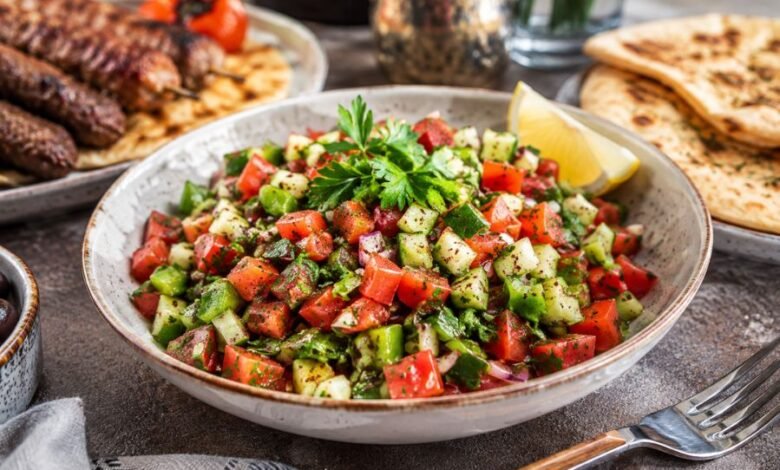
Fresh vegetables, bright dressing, and Turkish flavour make Çoban salatası a simple side dish worth seeking out.
Searching for Coban Salatasi Near Me usually means one thing: you want a fresh, crisp Turkish salad that tastes as good as the dishes served alongside it. Çoban salatası, commonly translated as shepherd’s salad, is a familiar part of Turkish cuisine. Traditional versions combine chopped tomatoes, cucumbers, green peppers, herbs and onion with a light dressing, usually based on olive oil and lemon or vinegar. Turkey’s Ministry of Culture and Tourism includes versions built around these core fresh ingredients.
Finding a good version locally can take more than searching the exact Turkish name. Restaurants may call it shepherd’s salad, Coban salad, Turkish salad or simply a house salad. Knowing what to look for makes it easier to find a fresh, well-balanced plate rather than an ordinary mixed salad.
What Is Coban Salatasi?
Çoban salatası is a Turkish chopped vegetable salad known for its simplicity. A traditional recipe published by Turkey’s Ministry of Culture and Tourism uses cucumbers, tomatoes, green peppers, spring onions, parsley, fresh mint, olive oil, lemon juice and salt. Another official Turkish recipe uses tomato, onion, green pepper, parsley, cucumber, vinegar, olive oil, salt and black pepper, showing that small variations are normal.
The name is commonly translated as shepherd’s salad. Unlike salads built around lettuce or rich creamy dressings, Çoban salatası depends mainly on chopped fresh vegetables and a sharp, simple dressing. The vegetables are normally cut small enough that several flavours can be picked up in one forkful.
Its character comes from contrast. Tomatoes bring juiciness, cucumber adds crunch, green pepper supplies a fresh bite, and onion gives the salad extra sharpness. Parsley and other fresh herbs can add fragrance, while olive oil and acidic ingredients bring everything together.
How to Find the Best Coban Salatasi Near Me
Searching the exact phrase Coban Salatasi Near Me is a useful starting point, but spelling differences can hide good options. Turkish letters such as Ç and ı are often removed from English-language menus, so the same dish may appear as Coban Salatasi, Coban Salad, Çoban Salatası or Turkish Shepherd’s Salad.
Start With Turkish Restaurants
Authentic Turkish restaurants are usually the most logical places to check. Look especially at restaurants serving kebabs, grilled meat, pide, lahmacun, meze and other traditional Turkish dishes.
When browsing a menu, check the salad, cold starter and side-dish sections rather than looking only at main courses. Some restaurants include shepherd’s salad as an accompaniment instead of highlighting it as a standalone speciality.
Search More Than One Name
If the exact keyword produces few results, try natural alternatives such as:
- Turkish shepherd’s salad near me
- Turkish salad near me
- Coban salad near me
- Çoban salatası nearby
- Turkish restaurant shepherd salad
- Turkish kebab restaurant near me
This is especially useful because restaurants outside Turkey often translate dish names for customers who may not recognise the Turkish spelling.
Look at Recent Food Photos
Menu descriptions tell only part of the story. Recent customer photos can help show how a restaurant actually prepares the salad.
A good-looking Çoban salatası should appear fresh rather than tired or watery. Tomatoes and cucumbers should still have visible shape, herbs should look fresh, and the vegetables should not appear buried beneath a heavy creamy sauce. The classic versions documented by Turkish cultural sources rely on vegetables, herbs, olive oil and an acidic dressing rather than mayonnaise-based dressing.
What Should Authentic Coban Salatasi Contain?
There is no need for every restaurant to use an identical recipe. Even official Turkish recipes show variations in herbs, onions and whether lemon juice or vinegar is used.
Still, several ingredients form the recognisable foundation of the dish.
Tomatoes and Cucumbers
Tomatoes and cucumbers provide most of the salad’s volume. They work best when fresh and firm enough to hold their shape after chopping.
Tomatoes naturally release juice after being salted, which becomes part of the flavourful liquid at the bottom of the dish. Cucumber balances that softness with a cooler, crisper texture.
Green Pepper and Onion
Green peppers are another recurring ingredient in traditional recipes. Depending on the restaurant, they may be mild or have a slightly stronger bite.
Onion or spring onion adds another layer of flavour. Some versions use ordinary onion, while an official Ministry of Culture and Tourism preparation specifies spring onions. This is one reason two authentic-looking plates can taste slightly different.
Parsley, Mint and Fresh Herbs
Parsley is particularly common. Fresh mint also appears in one of the Ministry of Culture and Tourism recipes.
Herbs should support the vegetables rather than overwhelm them. They add freshness and make a simple combination of tomato, cucumber and onion taste more distinctive.
Olive Oil and Acidity
A classic dressing is deliberately straightforward. One official version combines olive oil, lemon juice and salt, while another uses olive oil and vinegar.
That variation matters when ordering. A salad made with lemon may taste brighter and more citrus-forward, while vinegar gives a sharper acidic note. Neither automatically makes the salad less authentic.
What Makes a Good Restaurant Version?
The ingredient list may be simple, but ingredient quality and preparation make a major difference.
Freshness comes first. Because there is no heavy sauce to hide poor produce, soft cucumbers, flavourless tomatoes or wilted herbs are immediately noticeable. A restaurant that prepares the salad close to serving time is more likely to preserve the vegetables’ texture.
The chop also matters. Çoban salatası is generally a chopped salad rather than a plate of large tomato wedges and whole lettuce leaves. Turkish culinary sources describe combinations based on chopped cucumber, tomatoes, peppers, onions and herbs.
Finally, the dressing should complement the vegetables. Too much oil can make the plate feel heavy, while excessive acidity can cover the flavour of ripe tomatoes and cucumber. A balanced serving lets the produce remain the focus.
Coban Salatasi Versus Other Mediterranean-Style Salads
Çoban salatası can resemble several chopped salads found across the Mediterranean, Middle East and surrounding regions, but names should not automatically be treated as interchangeable.
One of its defining features is the combination of finely or neatly chopped vegetables with a relatively uncomplicated dressing. Traditional Turkish examples centre on tomato, cucumber, green pepper, onion or spring onion, parsley and sometimes mint.
Some restaurants add ingredients such as feta, olives, sumac or pomegranate-based seasoning. These additions can produce a delicious salad, but they are not necessary for the dish to be recognisable as traditional Çoban salatası. If authenticity is your priority, checking the menu description before ordering is useful.
What to Order With Coban Salatasi
The freshness of shepherd’s salad makes it particularly suitable beside richer or grilled dishes. Turkish food sources commonly present it as a side salad, and Turkish recipe references pair it with foods such as kebabs, grilled meat, pide and lahmacun.
At a Turkish restaurant, it can therefore work well beside lamb or chicken kebabs, grilled meat, rice dishes or freshly baked flatbreads. Its acidic dressing and raw vegetables create contrast with warm, savoury food.
It can also be part of a larger table containing several smaller dishes. If ordering for a group, asking about portion size is sensible because restaurants may serve it either as an individual salad or as a plate designed for sharing.
Ordering Coban Salatasi for Delivery or Takeaway
A salad that tastes excellent at the restaurant can behave differently during delivery. Chopped tomatoes release moisture, and salt encourages more liquid to collect as the salad sits.
For takeaway, consider requesting the dressing separately if the restaurant allows it. Mixing the dressing shortly before eating can help preserve the cucumber and pepper texture.
Short delivery times are also preferable for a salad built almost entirely from raw vegetables. If reviews repeatedly mention fresh salads, careful packaging and consistent vegetable quality, that information can be more useful than relying on an overall restaurant rating alone.
How to Choose Between Several Nearby Options
When several restaurants offer the dish, compare the details that actually affect the meal.
First, read the ingredient description. A menu naming tomato, cucumber, pepper, onion, parsley and a lemon-olive oil or vinegar-based dressing is close to well-established Turkish preparations.
Next, examine recent photos and reviews for comments about freshness. Pay attention to portion size as well, particularly if you intend to share it with a main course.
Price alone should not determine the choice. A slightly more expensive salad made with ripe tomatoes, crisp cucumber and fresh herbs may offer far better value than a cheaper plate that has been sitting prepared for too long.
Can You Ask a Restaurant to Customise It?
Because the dish uses relatively simple ingredients, some restaurants may be able to accommodate basic preferences, although this depends on the kitchen.
For example, diners who dislike raw onion can ask whether it can be reduced or removed. Those who prefer stronger acidity can ask whether extra lemon is available. If a restaurant uses an additional ingredient not listed on the menu, asking before ordering is the safest approach.
For food allergies or medically necessary dietary restrictions, do not assume that a simple vegetable salad is automatically suitable. Cross-contact and restaurant-specific dressings can vary, so the restaurant should confirm ingredients and preparation practices directly.
Conclusion
Finding a satisfying Coban Salatasi Near Me becomes much easier once you know the dish’s common names and core ingredients. Traditional Turkish preparations centre on fresh tomatoes, cucumber, green pepper, onion or spring onion, herbs and a simple olive-oil dressing with lemon or vinegar.
When choosing a nearby restaurant, look beyond the exact Turkish spelling. Search for shepherd’s salad and Coban salad, inspect recent food photos, read the ingredient description and pay particular attention to freshness. A well-made version does not need complicated toppings or an elaborate dressing. Its appeal comes from crisp produce, careful chopping and a clean balance of oil, acidity, herbs and natural vegetable flavour.
Frequently Asked Questions
What is Coban Salatasi in English?
Çoban salatası is commonly translated as shepherd’s salad. It is a Turkish chopped salad typically based on tomatoes, cucumbers, peppers, onion, herbs and a light dressing.
Where can I find Coban Salatasi near me?
Start with Turkish restaurants, kebab houses and Turkish grill restaurants. Search using several names, including “Coban salad,” “Çoban salatası” and “Turkish shepherd’s salad,” because menu terminology varies.
Does Coban Salatasi contain feta cheese?
Feta is not required in the traditional versions published by Turkey’s Ministry of Culture and Tourism. Some restaurants may add cheese as their own variation, so check the menu if you want a specific style.
What dressing is used on Turkish shepherd’s salad?
A common dressing uses olive oil, lemon juice and salt. Other traditional preparations use vinegar with olive oil, so the exact acidity can vary.
Is Coban Salatasi usually served as a main dish?
It is commonly presented as a side salad and pairs naturally with grilled foods and other Turkish dishes. Restaurant serving sizes vary, so larger portions may also be suitable for sharing.